
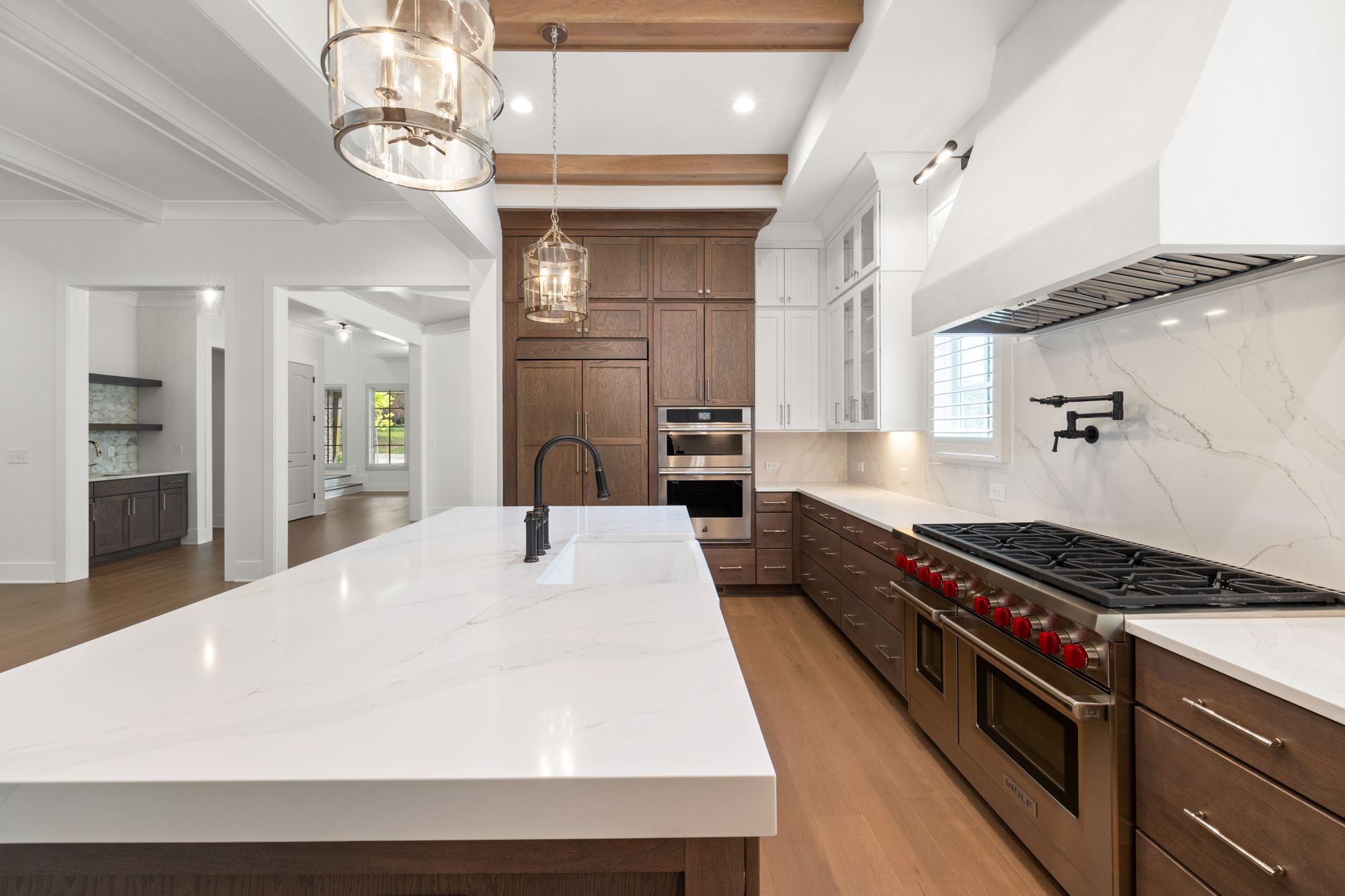
Most homeowners who come to us about kitchen remodeling in Austin have already been thinking about the project for months — sometimes years. They have a rough idea of what they want, a Pinterest board or two, and a strong feeling that something needs to change. What they often haven’t done is work through the practical decisions that determine whether a remodel goes smoothly or turns into a months-long headache. This post walks through everything worth thinking through before you book a contractor.
Key Takeaways
- Scope clarity saves time and money — know what you’re changing before anyone pulls a permit or orders cabinets.
- Your kitchen’s existing layout (especially plumbing and gas lines) shapes how far your budget will realistically stretch.
- Cabinet lead times in particular can extend a project timeline significantly — plan for this early.
- Austin’s permitting requirements apply to most structural, electrical, and plumbing work in a kitchen remodel.
- Choosing a contractor before finalizing your design often leads to better outcomes than the reverse.
- Living without a functional kitchen for several weeks is real — plan for it before demolition day.
Start With What’s Actually Driving the Remodel
Before you look at a single cabinet door style or countertop sample, it helps to be honest about what is actually broken. We ask every homeowner the same question: what does your kitchen make you do or feel that you want to stop? The answers shape everything.
Some kitchens lack storage. Some are dark and feel smaller than they are. Some haven’t been updated since the 1990s and have layouts that actively fight the way a modern family cooks. Some are just cosmetically tired — the bones are fine, but the surfaces look worn. Each of those problems has a different solution, and confusing one for another leads to expensive missteps.
If your core issue is storage, a cabinet installation or reconfiguration might resolve it without tearing out the whole kitchen. If the layout itself is the problem — a peninsula that blocks traffic flow, a fridge in the wrong corner, no connection to the dining room — you’re probably looking at a more substantial structural change. Knowing which camp you’re in before you call a contractor means you get an accurate estimate, not a ballpark guess.
Understand What Your Existing Layout Will and Won’t Allow
One of the most common things we explain to homeowners is that their kitchen’s existing infrastructure — plumbing rough-ins, gas lines, load-bearing walls, electrical panel capacity — is the real constraint on the remodel, not their imagination. Moving a sink twenty-four inches sounds simple. It often isn’t, because the drain stack may not cooperate without significant work inside the floor or wall.
Here’s what to think through before assuming a layout change is straightforward:
- Plumbing locations: The further you move a sink or dishwasher from its current drain and supply lines, the more invasive — and time-consuming — the rough plumbing work becomes.
- Gas lines: If you’re adding or relocating a gas range or cooktop, a licensed plumber or gas fitter needs to extend and pressure-test those lines. This is not a DIY step in Austin, and the city will inspect it.
- Load-bearing walls: Opening up a kitchen to a living area often means removing a wall. If it’s load-bearing, a structural beam goes in — which affects both scope and timeline.
- Electrical capacity: Modern kitchens with double ovens, warming drawers, and refrigerators with dual compressors often need panel upgrades or new dedicated circuits, which require permits and inspections.
None of these are reasons not to make a change. They’re reasons to know about them before you’ve signed a contract, so you’re not surprised by additional scope halfway through demolition.
Think Through Your Design Before You Fall in Love With It
Design decisions that look beautiful on a mood board sometimes run into reality on the job site. A few things we consistently see homeowners wish they’d thought through earlier:
Cabinet Style and Lead Times
Stock cabinets (pre-built in standard sizes) are available quickly, often within days. Semi-custom cabinets — built to non-standard dimensions or with specific finishes — typically take several weeks to arrive. Fully custom cabinetry can take considerably longer. If your timeline matters, your cabinet choice directly controls it. We always tell homeowners: don’t order custom cabinets and then expect a quick start.
Countertop Material and Edge Profile
Quartz, granite, quartzite, butcher block, and porcelain slabs all have different maintenance profiles. Granite needs periodic sealing. Quartzite (not to be confused with quartz, which is engineered) is a natural stone that’s harder and less porous than marble but still needs care. Quartz is engineered and very low-maintenance but can show seams more visibly on large islands. Think about how you actually use your kitchen, not just how you want it to look. Families with kids often find a matte or honed finish more forgiving than a high-polish surface.
Tile Backsplash and Flooring Coordination
If you’re also updating your kitchen floor — which many Austin homeowners do at the same time — the tile selection needs to be coordinated before either is ordered. The right sequence is: flooring goes in after cabinets are installed but before toe kicks and appliances. If you’re doing a tile installation, timing the order and delivery correctly prevents delays on the back half of the project.
Permits: What Austin Requires for Kitchen Remodels
Austin’s Development Services Department requires permits for most work that goes beyond purely cosmetic changes. Replacing cabinet hardware or repainting walls? No permit needed. But if your remodel involves any of the following, expect the permitting process to be part of your timeline:
- Electrical work — new circuits, panel changes, or moving outlets and switches
- Plumbing work — moving, adding, or replacing supply and drain lines
- Gas line work — any extension or relocation of a gas connection
- Structural changes — removing or modifying walls, especially load-bearing ones
- HVAC modifications — adding or repositioning range hood ductwork that ties into the building system
The permit process adds time to the front end of a project, but it’s not optional, and it protects you. Uninspected work can create real problems when you go to sell the home — inspectors catch it, buyers back out, and you’re retroactively pulling permits on completed work. A licensed contractor handles the permit applications as part of the job; if a contractor suggests skipping permits to save time, that’s a red flag.
If you want to learn more about how Austin’s permit process works, we’ve covered it in more detail elsewhere on our site — but for kitchen remodels specifically, budget extra weeks on the front end when your project includes any of the categories above.
Choosing a Contractor: What Actually Matters
We’re a family-owned, licensed and insured remodeling company serving Austin, Round Rock, Cedar Park, Pflugerville, Georgetown, and Lakeway — so yes, we have a perspective here. But this advice holds regardless of who you hire.
The most important things to confirm before signing with any kitchen remodeling contractor:
License and Insurance
In Texas, general contractors aren’t licensed at the state level the way plumbers and electricians are, but the subcontractors doing that trade work must be. Your GC should be able to show you that their plumbing and electrical subs hold active Texas licenses. General liability and workers’ compensation insurance should be current — ask for a certificate of insurance, not just a verbal assurance.
A Clear, Written Scope of Work
A good estimate isn’t a one-line number. It breaks down labor by phase, lists materials by category (or references an allowance where selections aren’t finalized), and describes what is and isn’t included. Vague estimates lead to change orders. Detailed scopes of work lead to predictable projects.
Communication Style
This sounds soft, but it matters enormously. A remodel is a weeks-long working relationship. Do they return calls the same day? Do they explain things clearly without making you feel like you’re asking dumb questions? Do they tell you things you might not want to hear — like a timeline that’s longer than you hoped — rather than just telling you what gets the contract signed? At BH Remodeling, our tagline is “First We Listen. Then We Build.” — because the listening part is where most problems get prevented.
References and Completed Work
Ask to see finished kitchens, not just renders or photos from manufacturers. Our completed projects gallery shows real work done in real Austin-area homes, which gives you a much better sense of fit than a stock photo ever would.
Plan Your Life Around the Remodel, Not the Other Way Around
This is the part homeowners most consistently underestimate. A kitchen remodel — even a focused one that doesn’t involve structural work — means your kitchen will be non-functional for a meaningful stretch of time. Demolition can happen quickly, but then there’s a period where cabinets are in but countertops aren’t, or countertops are templated but not installed, or the backsplash tile is set but the grout isn’t cured. During these phases, you’re eating takeout, using a hot plate, or running dishes through a bathroom sink.
Think through these logistics before you start:
- Where will you set up a temporary kitchen? A folding table with a microwave, coffee maker, and toaster oven in the dining room gets you through most of it.
- Do you have pets or young children who need to be kept away from a dusty, active job site?
- Does your timeline conflict with a holiday, family gathering, or other event where you need a working kitchen?
- If you’re in a home where the kitchen connects to the main living area, dust control and site cleanliness matter — ask your contractor specifically how they handle this.
We take clean job sites seriously. Protecting adjacent rooms with barriers, using floor protection on finished surfaces in neighboring spaces, and doing a thorough cleanup at the end of each workday aren’t extras — they’re how we run every project.
Frequently Asked Questions
Should I finalize my design before getting contractor estimates?
You don’t need a fully detailed design — but you do need enough clarity to get an apples-to-apples estimate. Know roughly what you’re keeping, what you’re replacing, and whether you’re changing the layout. Bringing a contractor in early can actually help you refine the design with real-world feasibility in mind.
How far in advance should I start planning a kitchen remodel in Austin?
For a full kitchen remodel, starting your planning three to six months before your target start date is realistic. That allows time for design decisions, material lead times (especially cabinets), permitting, and contractor scheduling — which fills up, particularly in spring and fall.
What’s the difference between a kitchen refresh and a full remodel?
A refresh typically involves cosmetic updates — new paint, new hardware, replacing appliances, maybe new countertops — without changing the layout or touching plumbing and electrical. A full remodel changes the structure or major systems of the kitchen. Refreshes are faster, simpler, and don’t usually require permits. Full remodels take longer and involve more coordination.
Do I need to move out during a kitchen remodel?
Most homeowners stay in their homes during a kitchen remodel. It’s less convenient than having a functional kitchen, but it’s manageable with some planning. Moving out is rarely necessary unless the remodel is part of a larger whole-home renovation that disrupts multiple living areas at once.
Can I make changes once the project has started?
You can — but mid-project changes are the number one driver of cost overruns and timeline extensions. Changes after demolition, or after materials have been ordered, often trigger fees and delays. Spending more time in the planning phase to get decisions locked down saves real headache once work begins.
Ready to Start Planning Your Kitchen Remodel?
If you’re in the early stages of thinking through a kitchen remodel in Austin, Round Rock, Cedar Park, Georgetown, Pflugerville, or Lakeway — and you’d rather have a real conversation than fill out a form and wait — we’re the kind of team that takes the time to understand what you actually need before we talk about solutions.
Our Austin kitchen remodeling service is built around honest estimates, clear communication, and crews that treat your home with care. Take a look at what we do, browse some of our completed work, or reach out to us directly. We’ll start by listening.
Photo by Curtis Adams on Pexels.